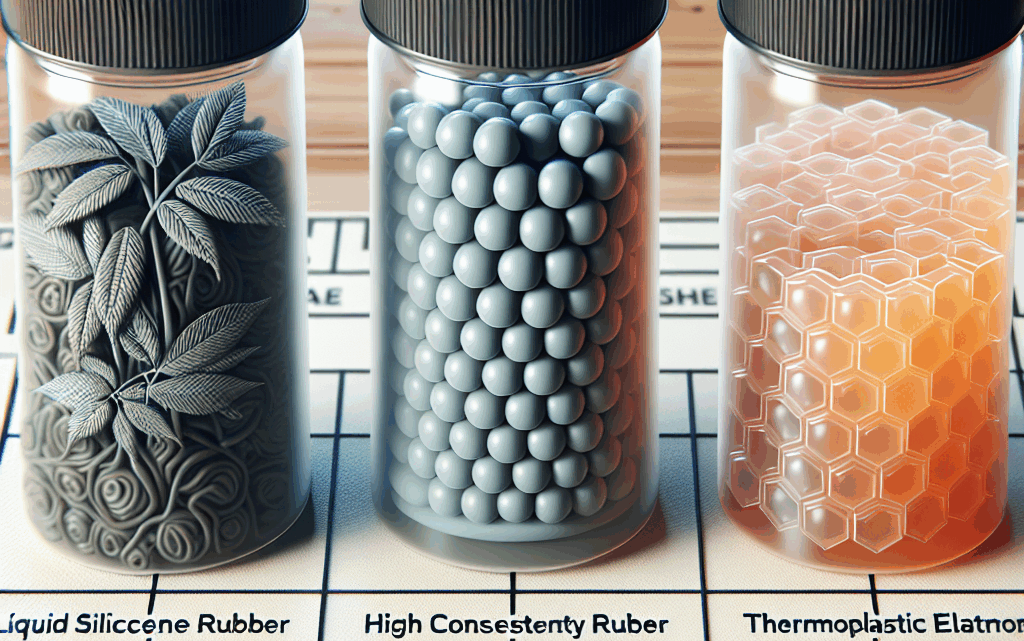
When it comes to selecting the right material for components, the decision is crucial, as the properties of the chosen material will directly influence the functionality, durability, and efficiency of the final product. Among the many materials available, liquid silicone rubber (LSR), high consistency rubber (HCR), and thermoplastic elastomers (TPE) are prominent options, each offering distinct advantages and applications. Assessing the features, benefits, and potential drawbacks of these materials can guide you in making an informed choice that aligns with your project’s specific requirements.
What is Liquid Silicone Rubber (LSR)?
Liquid Silicone Rubber (LSR) is a versatile material known for its excellent durability and flexibility. It is a two-part system consisting of a liquid base and a catalyst that, when mixed, form a solid elastomer. This material is frequently used in manufacturing because of its unique properties, such as high thermal stability, resistance to harsh environmental conditions, and hypoallergenic characteristics. These qualities make LSR the preferred choice for various industries, including medical devices, automotive components, and consumer goods.
Advantages of LSR
- High temperature resistance: LSR can withstand extreme temperatures without degrading, making it suitable for applications involving exposure to heat.
- Biocompatibility: Due to its hypoallergenic nature, LSR is safe for medical and food-related uses.
- Flexibility and durability: Even with repeated stress and bending, LSR maintains its integrity and elasticity.
- Optical clarity: LSR is often used in applications requiring transparency or translucency.
Understanding High Consistency Rubber (HCR)
High Consistency Rubber (HCR), often referred to as solid silicone rubber, differs from LSR in its chemical and physical structure. HCR is generally supplied as a gum and requires high-pressure molding techniques during processing. It is particularly admired for its superior mechanical properties and strength. The applications of HCR are vast, but it is commonly used in seals, gaskets, and other mechanical components exposed to substantial wear and tear.
Benefits of HCR
- Robustness: HCR’s mechanical strength makes it suitable for demanding environments.
- Dimensional stability: Products made from HCR maintain their shape and size under stress.
- Exceptional resistance to extreme temperatures and chemicals, which enhances its utility in both industrial and consumer contexts.
- Versatility: Although it requires more complex processing, it can be customized for diverse applications.
Thermoplastic Elastomers (TPE)
Thermoplastic Elastomers are a class of copolymers or a physical mix of polymers, typically plastic and rubber. The key feature of TPE is its ability to be processed in the same way as plastics, yet exhibiting the flexible properties of rubber. This combination gives TPEs unique advantages in manufacturability and design flexibility, making them a popular choice for consumer products.
Advantages of TPE
- Ease of processing: TPEs can be easily molded, extruded, or thermoformed using conventional plastic processing techniques.
- Recyclability: Being thermoplastics, TPEs are recyclable, allowing for more sustainable production practices.
- Wide range of hardness: TPEs can be engineered to exhibit various degrees of hardness and flexibility.
- Aesthetic appeal: Available in a variety of colors and textures ideal for consumer-focused designs.
Choosing the Right Material for Your Application
The decision between LSR, HCR, and TPE largely depends on the specific requirements of the application. **If high temperature resistance and biocompatibility are critical, LSR emerges as a clear leader.** In contrast, **HCR might be preferable for applications demanding superior mechanical strength and stability.** For consumer goods requiring ease of processing and aesthetic customization, **TPE offers attractive features.**
Therefore, evaluating factors like required durability, environmental conditions, regulatory compliance, and processing capabilities is fundamental to making an informed decision. Balancing these attributes against budget constraints and production timelines can ensure that you select the most suitable material for your needs.